LiFE IP ForEst&FarmLand
In 2020 LIFE IP project ForEst&FarmLand (“Comprehensive management of forest and farming landscapes to improve the conservation status of Natura 2000 habitats and species”) was launched, involving all key players from universities, forestry sector and nature conservation as well as NGOs to jointly protect and restore Estonian landscapes and ecosystems and to improve the condition of the species and habitats in Estonian forests and agricultural lands.
The project (2020-2029) is led by the Ministry of the Environment and the total cost of the project is € 19,561,784.

Kalmer, a seventh-generation farmer and a cattle rancher at heart, manages 62.8 hectares of wooded meadows, arable meadows, and wooded pastures. In addition, his herds graze on land with heritage meadow characteristics outside protected areas, and he plans to expand his activities within those protected areas. The wooded meadow at Mädapea, which is managed by Kalmer, is like an oasis of biodiversity amidst the large-scale agricultural production of Viru County.

LIFE-IP project “ForEst&FarmLand” tests the control of four large plants – goldenrods, knotweeds, common snowberry, and false spiraea – using different control methods. All of these species have escaped the garden over time and are now crowding out the local flora in the wild. More information can be found: www.loodusrikaseesti.ee/en/regulation-alien-species.

LIFE-IP project “ForEst&FarmLand” tests the control of four large plants – goldenrods, knotweeds, common snowberry, and false spiraea – using different control methods. All of these species have escaped the garden over time and are now crowding out the local flora in the wild. More information can be found: www.loodusrikaseesti.ee/en/regulation-alien-species.

LIFE-IP project “ForEst&FarmLand” tests the control of four large plants – goldenrods, knotweeds, common snowberry, and false spiraea – using different control methods. All of these species have escaped the garden over time and are now crowding out the local flora in the wild. More information can be found: www.loodusrikaseesti.ee/en/regulation-alien-species.

LIFE-IP project “ForEst&FarmLand” tests the control of four large plants – goldenrods, knotweeds, common snowberry, and false spiraea – using different control methods. All of these species have escaped the garden over time and are now crowding out the local flora in the wild. More information can be found: www.loodusrikaseesti.ee/en/regulation-alien-species.

In order to start using the already overgrown alvars as pastures again, it is necessary first to thin out the junipers there and make space for animals to move. This is a laborious undertaking that the Estonian Fund for Nature does over and over again with the help of volunteers. For five consecutive summers, this has also been supported by the LIFE-IP project ForEst&FarmLand, which is why the Estonian Fund for Nature has had the chance to work also in a relatively remote area – the Kesselaiu alvar.
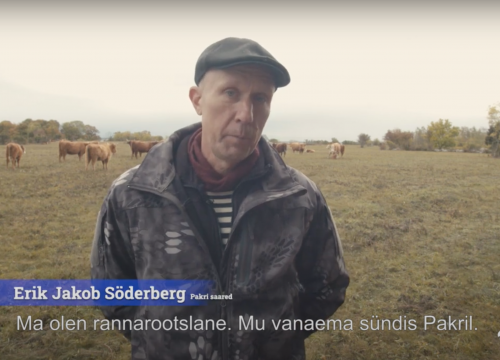
On 17 February 2022, we had an award ceremony to thank outstanding managers of semi-natural meadows, those who have made a great contribution to the preserve and restore semi-natural habitats of Estonia. Among the nominees was Erik Jakob Söderberg from Pakri Island, who tells his story in English.
The story of Erik Jakob Söderberg’s return to the island where his grandmother was born speaks for itself! Together with his friend, Urmas Sepp, and a herd of 300–400 cattles, Erik takes care of the most compact and largest alvar in Estonia, located on the Pakri Islands. A total of 1098 hectares of land is being restored and maintained.
News
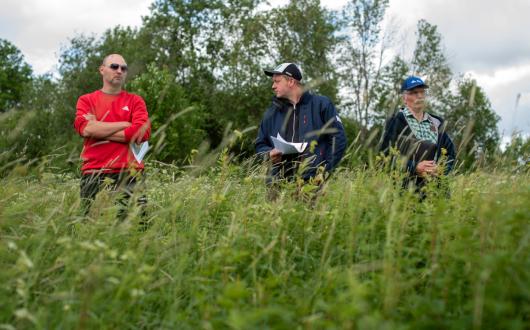
Three hundred and fourteen insights into the management of meadows
In spring, our partners from the University of Tartu invited meadow caretakers and owners to participate in a survey, through which we collected input for shaping the agricultural policy of the next EU funding period, while also looking for feedback on the advisory service launched by the Environmental Board.
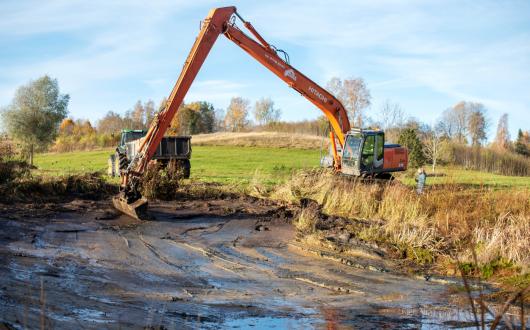
Ninety small water bodies for amphibians have been restored!
Ten more to go!
Amphibians need small, fishless ponds in which to spawn, but these are disappearing from our landscape. By restoring small water bodies, we are providing a home for amphibians and creating a habitat for many other species, including insects and bats.