November 3, 2025
Kaidi Tingas
Ninety small water bodies for amphibians have been restored!
Ten more to go!
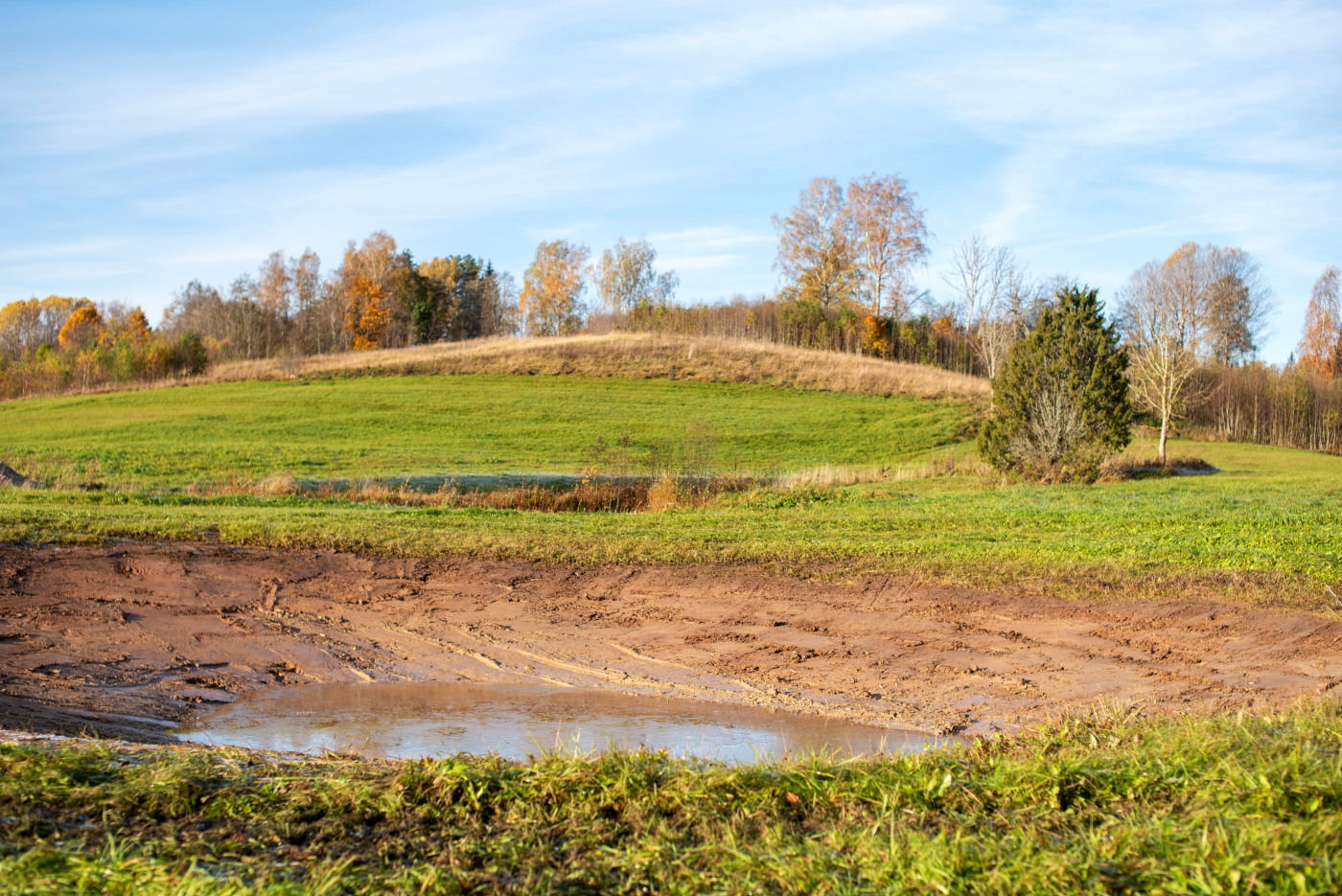
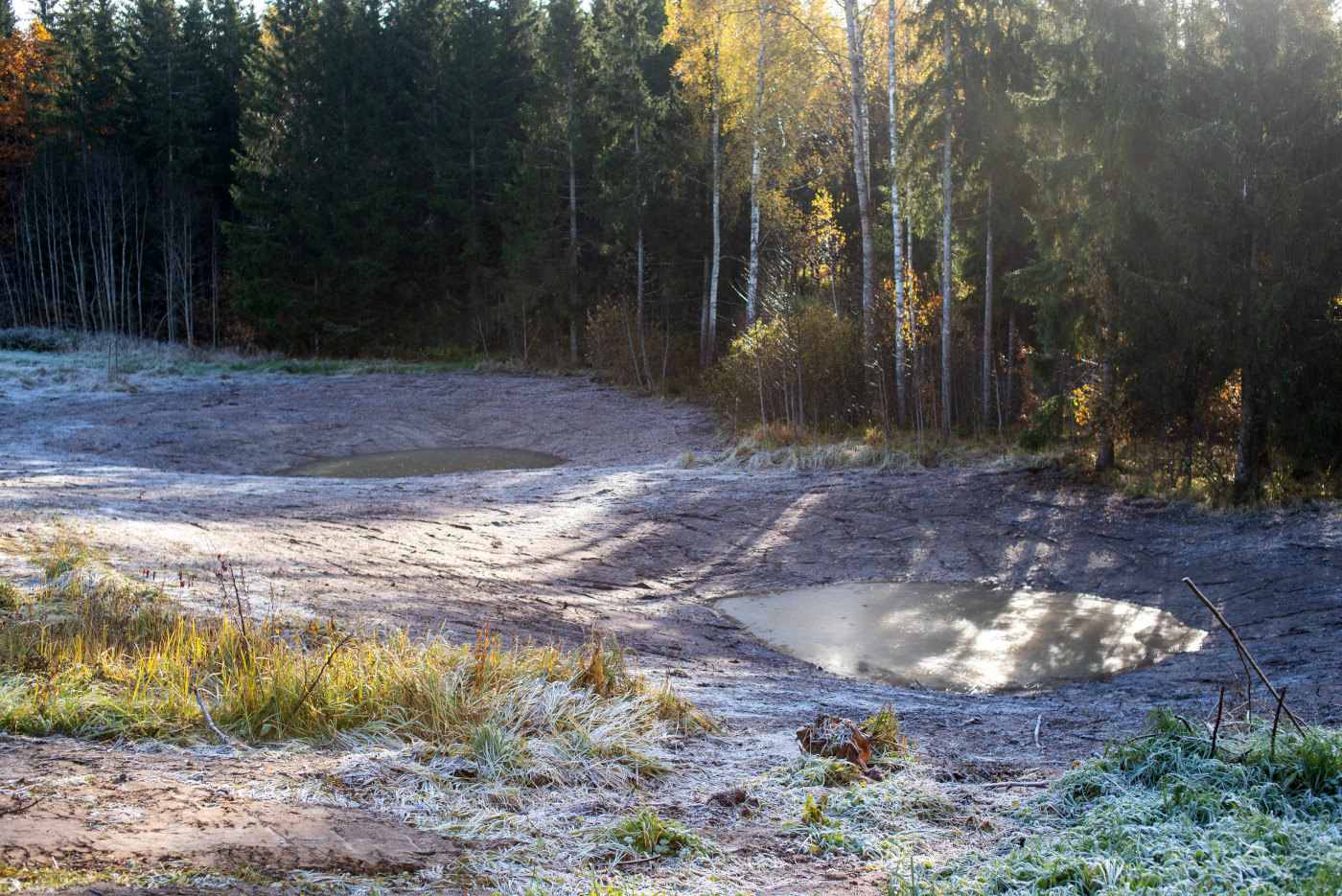
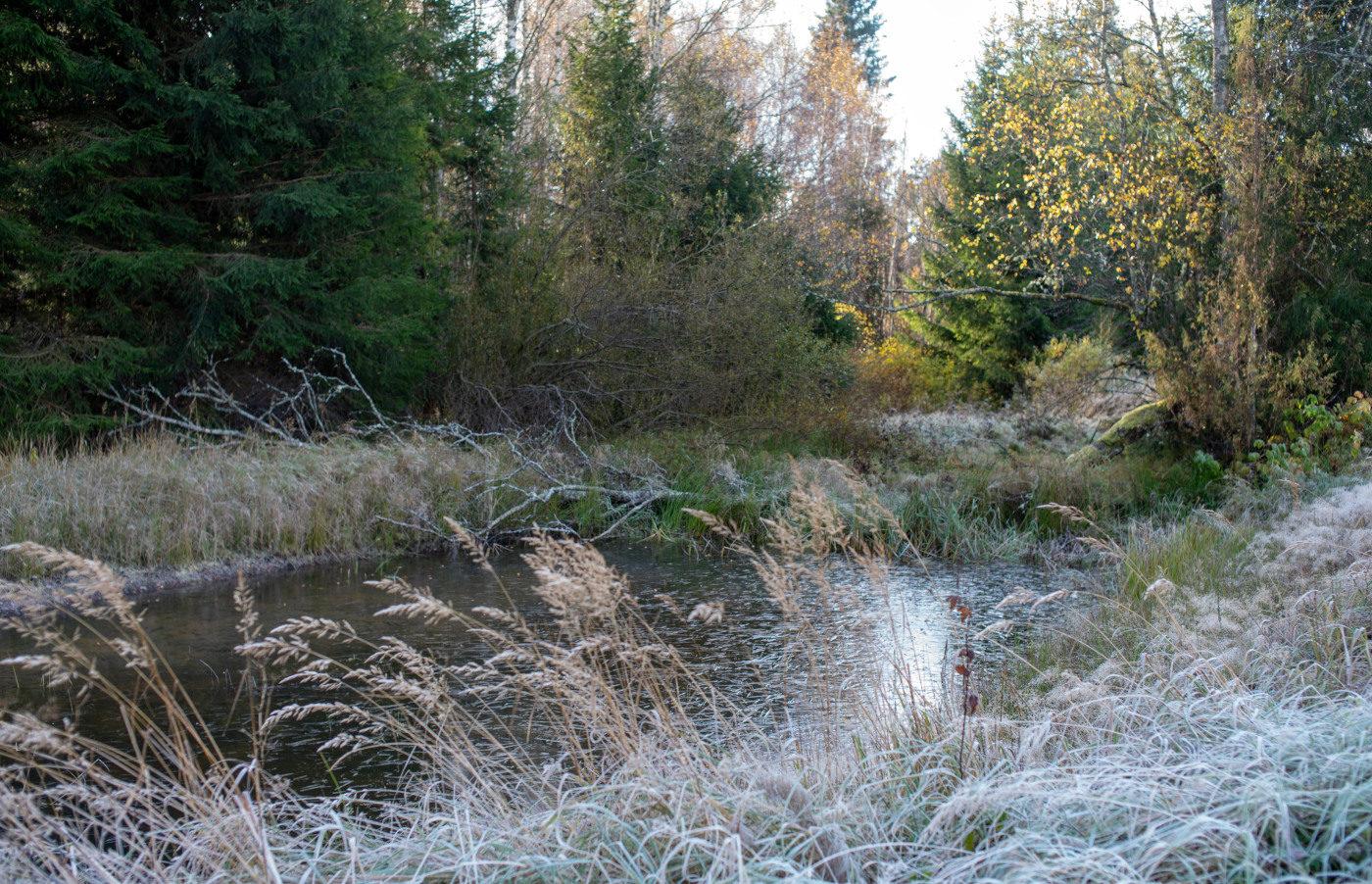
Amphibians need small, fishless ponds in which to spawn, but these are disappearing from our landscape. By restoring small water bodies, we are providing a home for amphibians and creating a habitat for many other species, including insects and bats.
‘Amphibians are sensitive indicator species – if they are struggling, it is a sign that something is wrong across the landscape,’ explains researcher Riinu Rannap. ‘Restoring one small body of water can give frogs and other amphibians a second chance to spawn, while also helping to restore biodiversity more broadly’.
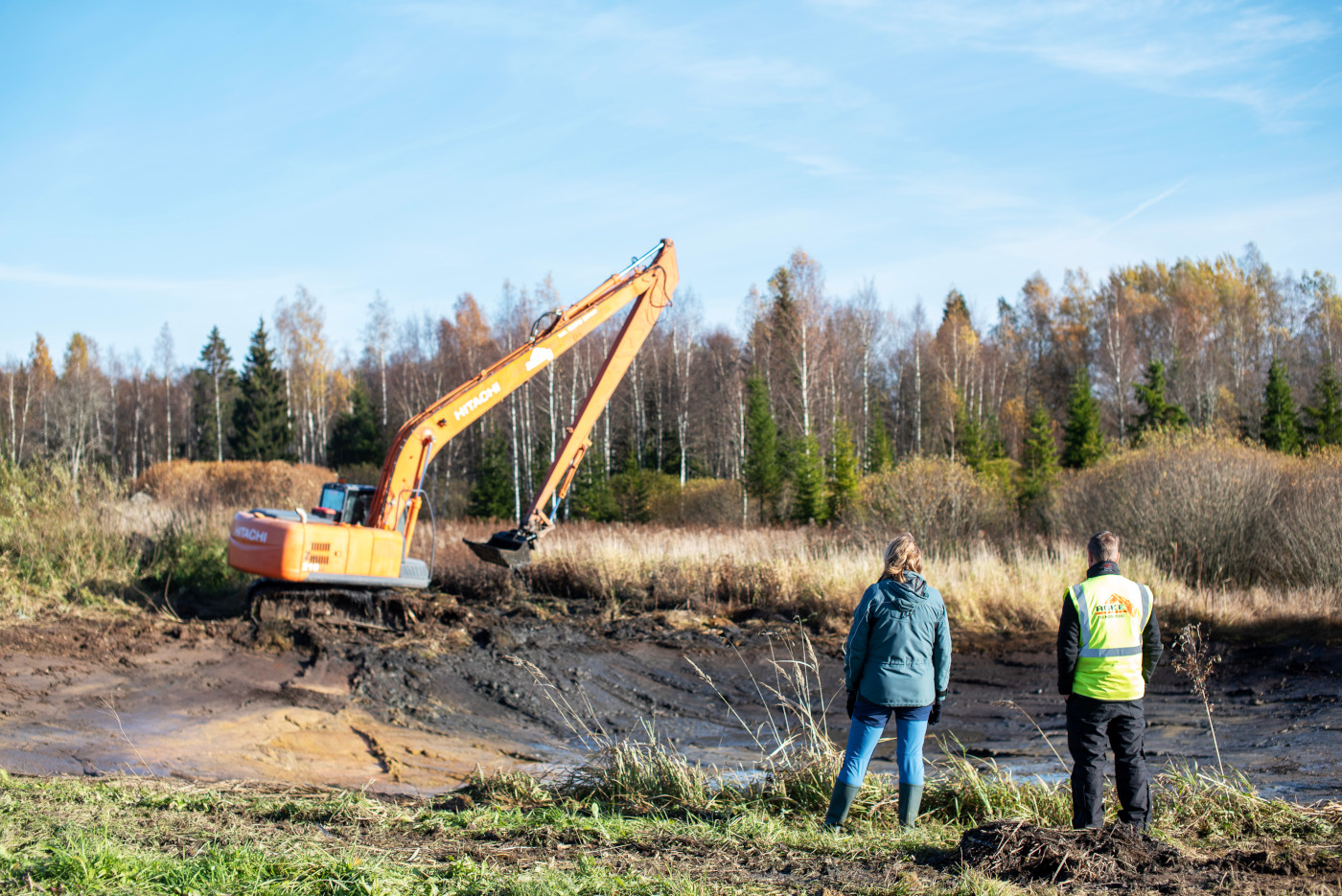
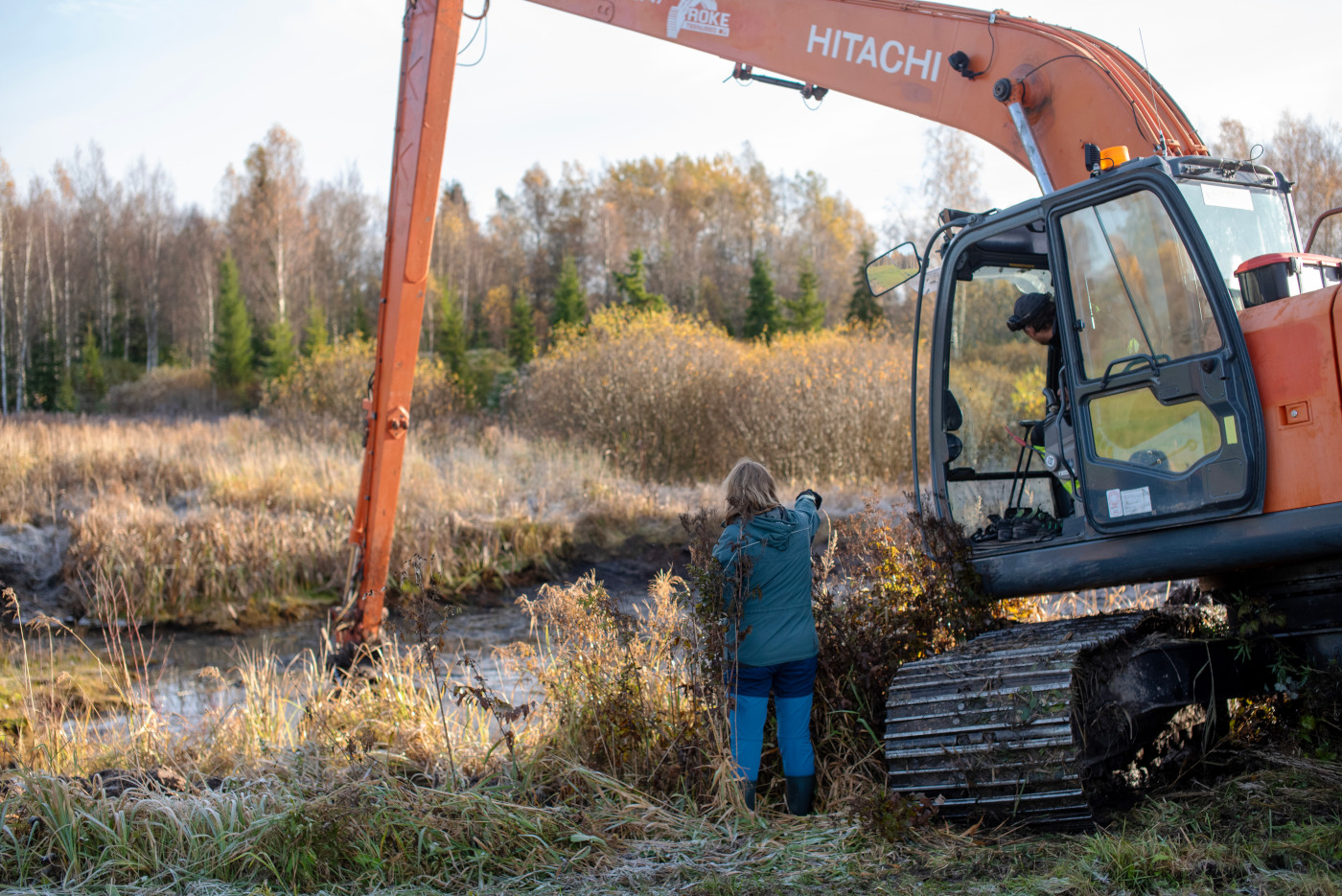
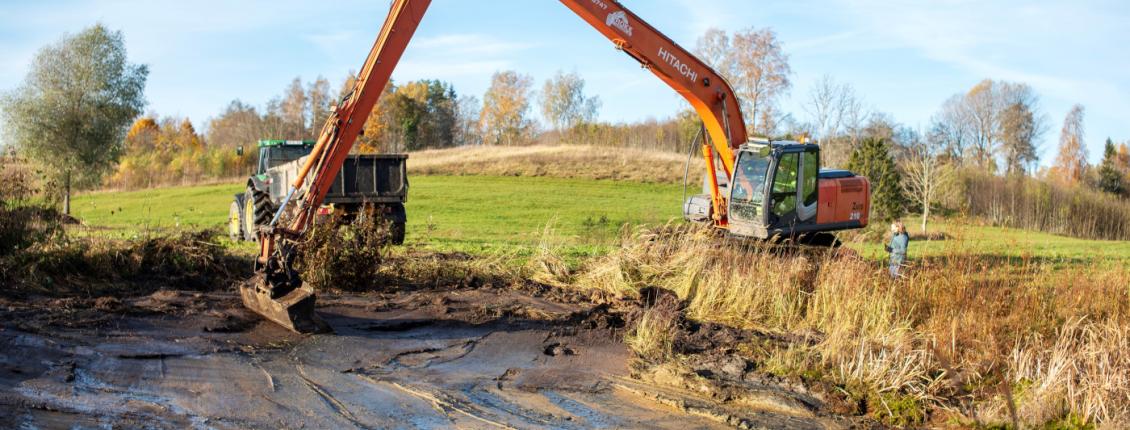
The target species for the ponds that were restored as part of our project are the common spadefoot toad and the northern crested newt. This autumn, we continued our work in southern Estonia, where we left off last year. Twenty-one bodies of water for amphibian spawning were restored in Otepää, Haanja, and Sadramõtsa. New excavator operators were trained and agreements were made with many nice landowners who were keen observers of the restoration work on their land, becoming advocates for amphibians in the process. With a few also becoming crane prosecutors 😉
As Riinu Rannap’s team had also monitored all of the small bodies of water set to be restored prior to their restoration, post-restoration monitoring showed that northern crested newts quickly adopted the ponds as their own, including those where they had not spawned before. However, we are still waiting for the common spadefoot toad to arrive.
It can be said that the restoration of small water bodies is one of the most efficient and cost-effective nature conservation activities. In addition to its ecological value, it also has a great aesthetic and educational impact – water makes life visible and the landscape more diverse.